Updated 24 October 2026 · Manually reviewed
A window seat is attractive because it combines a view, natural light and a feeling of enclosure. It becomes genuinely useful only when the seat depth, back angle, temperature and evening light suit the person using it. Treat the recess as a small piece of furniture, not an empty shelf for cushions.
1. Measure the usable recess
Record width, depth and height at several points because older walls are rarely perfectly square. Include window handles, trickle vents, curtain travel, radiators and any section of glass that opens inward. The usable seat is smaller than the visible recess once these moving parts are protected.
If building work is involved, confirm structural support, ventilation and local requirements with a qualified professional. Do not assume an existing sill can carry a person's weight.
2. Create support in the right order
Begin with a firm seat cushion that does not collapse to the hard base. Add back support before decorative cushions. In a deep recess, a substantial back cushion can reduce the effective depth so feet reach the floor or a stable footrest.
Try the seat for ten minutes with a book. Notice pressure behind the knees, the position of the lower back and whether the neck bends forward. Small adjustments to cushion thickness often matter more than adding another pillow.
3. Keep fabric and moisture under control
Leave ventilation paths open and keep cushions clear of glass that regularly becomes wet. Condensation can transfer moisture to fabric, timber and books. Wipe temporary moisture and investigate persistent condensation, mould or leaks rather than disguising them with textiles.
Use curtains or blinds according to their instructions and ensure the seat does not obstruct safe operation. In a draughty recess, lined window treatments and a removable lap throw can improve perceived comfort without packing the entire space with cushions.
4. Plan for the hour after daylight
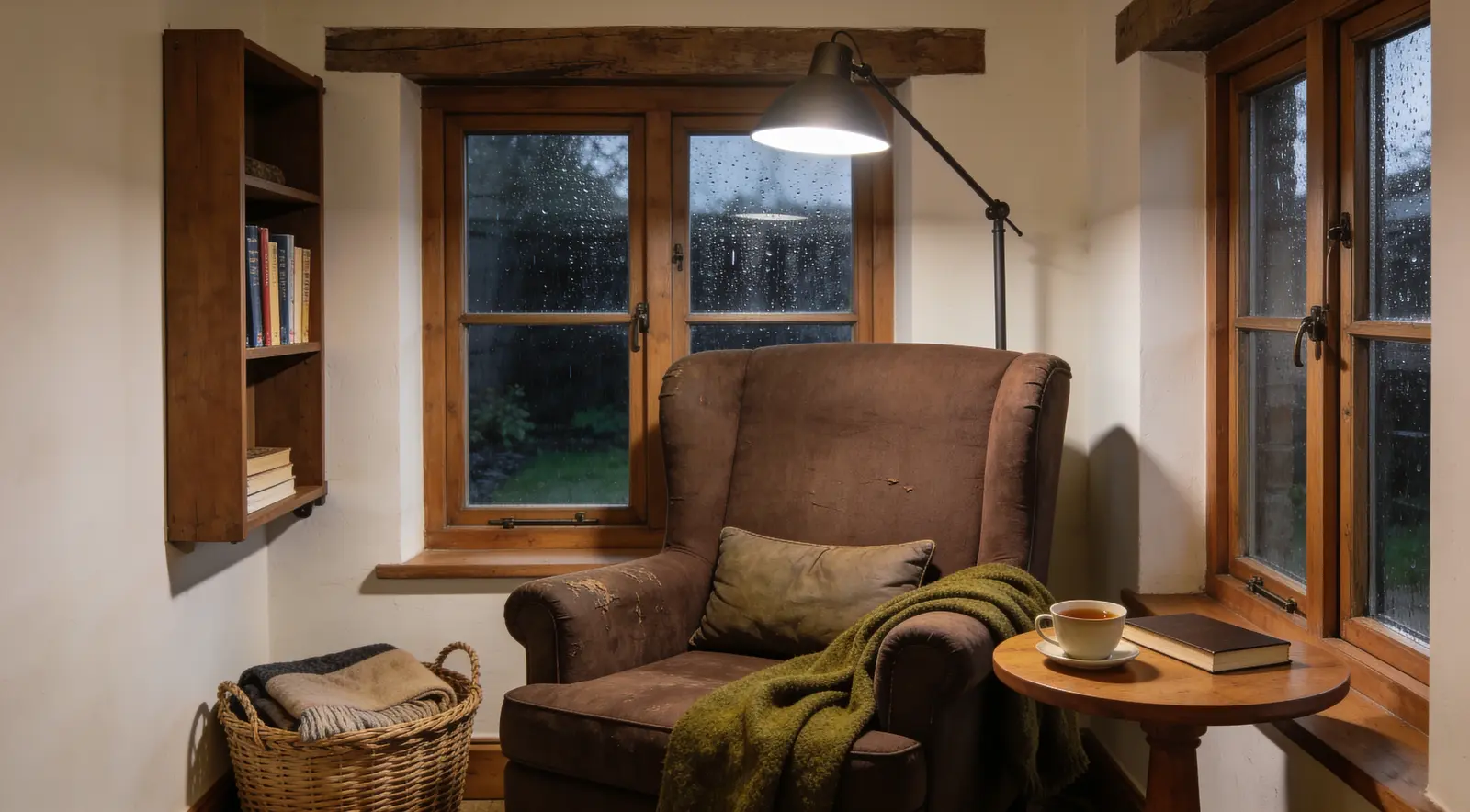
Natural light makes the seat appealing by day, but a reading lamp determines whether it is used at night. A small adjustable wall light can save surface space; a floor lamp may be easier when wiring changes are not appropriate. Keep the bulb out of direct sight and aim light across the page.
Route cables away from the step into the seat. New fixed electrical work belongs with a qualified electrician. Use the Warm Light Planner to compare an evening starting range and supporting layers.
5. Use storage without making access awkward
Drawers beneath the seat are easy to reach if there is open floor in front. Lift-up lids can provide more volume but require cushions and the seated person to move. Open cubbies keep books visible but collect dust and can look busy in a small recess.
Choose storage for what will actually live there: a current book, one throw and perhaps charging accessories. Avoid turning the seat into overflow storage for unrelated household items.
Window-seat comfort check
- The structure is suitable for seating.
- Handles, vents and curtains move freely.
- The seat supports the thighs without hard pressure.
- The back cushion allows a relaxed posture.
- The reading light reaches the page without glare.
- Fabric stays clear of moisture and heat sources.
- Storage opens without dismantling the entire seat.