Updated 24 October 2026 · Manually reviewed
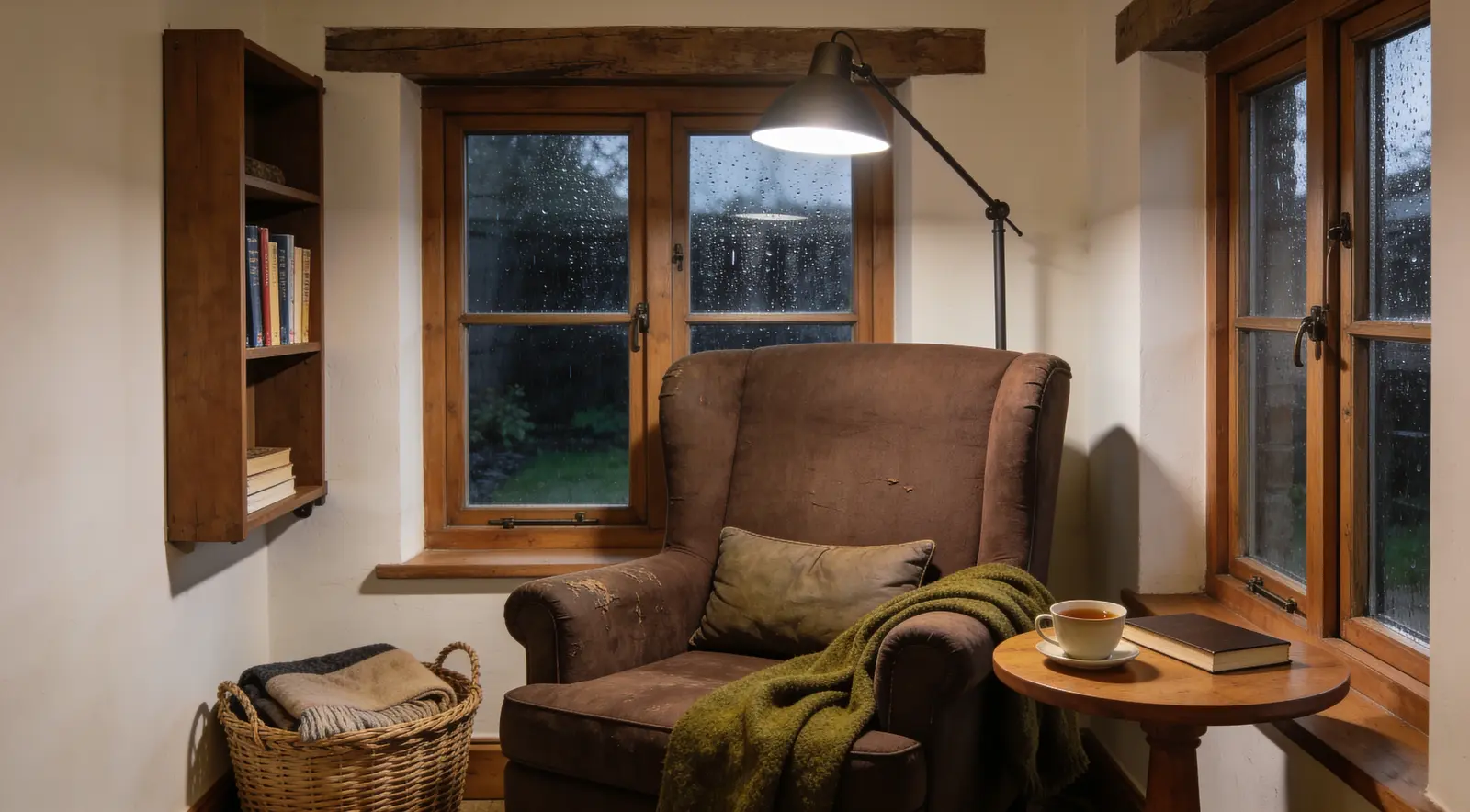
A reading nook can occupy a bedroom corner, the end of a hallway, a deep window recess or one side of a living room. What matters is not architectural drama. The essentials are a supported posture, light on the page, a place for a drink and enough quiet to remain there.
1. Measure the usable zone
Measure width, depth and the path needed to reach the seat. Include doors, drawers, radiators and curtain movement. A chair may fit on paper while making the route around it awkward. Mark the footprint on the floor with removable tape and live with it for a day before buying.
2. Choose support before silhouette
For longer reading, look for a seat that supports the lower back and allows your feet to rest on the floor or a stable footstool. Very deep lounge chairs often need a firm lumbar cushion. Window benches benefit from a dense seat pad rather than several soft pillows that collapse.
- An upright armchair suits focused reading.
- A compact chaise supports relaxed evening use.
- A built-in bench saves floor area but needs careful padding.
- A small swivel chair can turn between daylight and the room.
3. Put the light over the shoulder
Position the lamp so your hand and head do not cast a shadow over the page. Right-handed readers often prefer light arriving from the left, and left-handed readers from the right. A movable shade is more useful than a fixed decorative lamp.
Start with 2700K for a relaxed mood or 3000K when contrast is more important. Brightness needs vary by age, page size and eyesight, so choose a dimmable lamp when possible.
4. Add one dependable surface
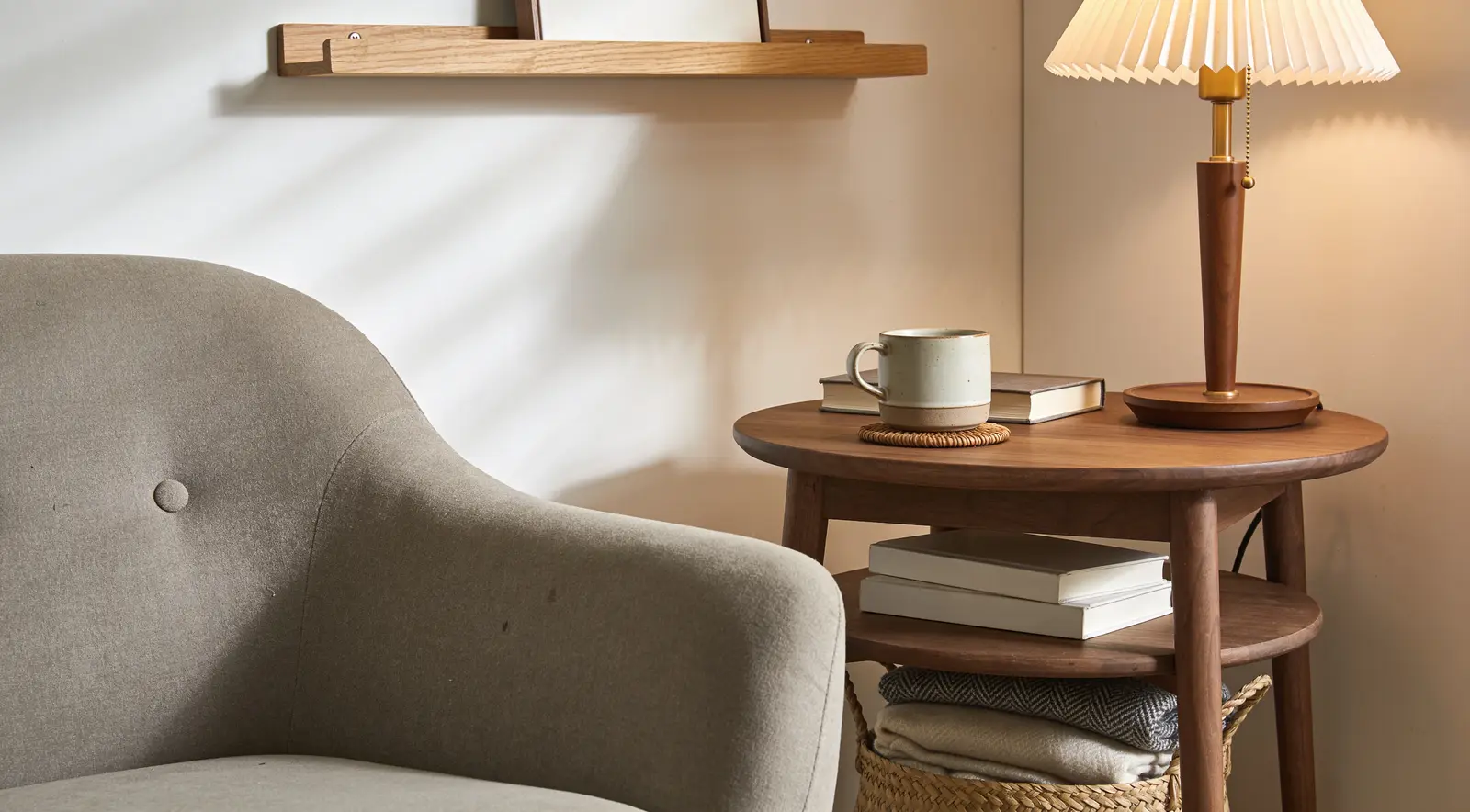
A side table should be stable, easy to reach and large enough for a mug plus the book you put down. Nesting tables or a narrow C-shaped table can work in tight rooms. Avoid soft ottomans for hot drinks unless you use a rigid tray.
5. Keep only active books nearby
A nook does not need a complete library. One small shelf, a wall ledge or a basket can hold the current reading stack. Limiting nearby books keeps dust and visual noise under control, particularly in a bedroom.
Three small-space layouts
- Corner chair: armchair angled towards the room, floor lamp behind, small table on the open side.
- Window bench: firm seat pad, one back cushion, wall-mounted lamp and narrow ledge.
- Sofa-end nook: use the quiet end of an existing sofa with a dedicated lamp and compact table.
Finish with restraint
Add one throw, one supportive cushion and a rug only if it solves cold flooring or sound. Leave plug sockets accessible, keep lamp cables away from the walking path, and never place portable heaters or open flames close to fabric.