Updated 24 October 2026 · Manually reviewed
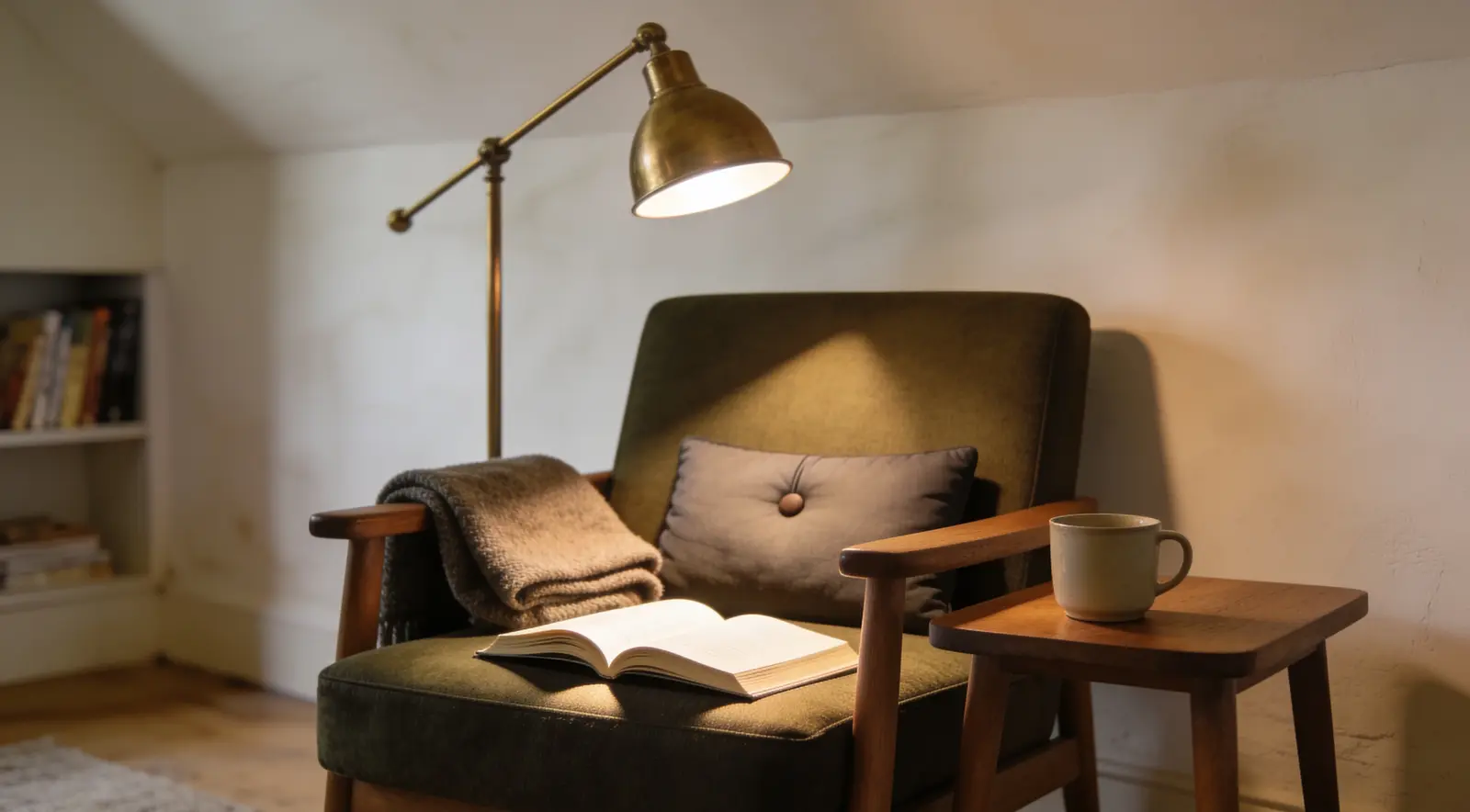
A reading lamp succeeds when it makes the page easy to see without becoming the brightest object in your view. That depends on position and shade design as much as the bulb. Set up the chair and table first, then place the lamp while somebody sits in the position normally used for reading.
1. Aim for the book, not the whole room
General lighting helps you move around safely, but a reading lamp should direct useful light onto the page. Place it close enough that the beam reaches both pages without demanding maximum brightness. If the lamp is far behind the chair, your head and shoulders may cast a shadow; if it is too far forward, the bulb may enter your direct sightline.
An adjustable arm or shade gives more control than a fixed decorative lamp. Keep the control within easy reach if possible, especially in a deep chair.
2. Start on the side opposite the writing hand
If you annotate, sketch or write while reading, placing the lamp opposite your dominant hand usually reduces hand shadows. For ordinary reading, either side can work. Choose the side that keeps the table usable and the cable away from the walking path.
In a shared nook, two modest task lights often work better than one very bright source between two seats. Each person can direct and dim their own light.
3. Adjust shade height while seated
Use eye level as the reference rather than relying on a universal lamp height. The bottom of an opaque shade often works well near seated eye level, hiding the bulb while allowing light to fall over the shoulder. A translucent shade may need a different position because the shade itself glows.
Check the setup from every seat that faces the lamp. A bulb concealed from the reader may still glare directly at somebody across the room. Move the lamp, lower the shade or choose a deeper shade before increasing brightness.
4. Watch reflections and bright pages
Glossy magazines, coated paper and tablets can reflect a concentrated light source. Move the lamp slightly to the side and adjust the beam so the reflection travels away from your eyes. For screens, follow the device maker's guidance and reduce strong contrast between the display and the surrounding room.
A second, softer lamp elsewhere in the room can prevent the reading corner from feeling like a spotlight in darkness. It should support the scene without creating another reflection in a nearby window.
5. Separate colour from brightness
Kelvin describes the colour appearance of white light; lumens describe light output. A warm bulb can still be bright, and a cooler bulb can still be dim. Many people prefer roughly 2700K–3000K for evening reading because it keeps a warm appearance while supporting visual clarity. Individual preference, age, page contrast and lamp design all matter.
Check the fixture's maximum rating, bulb shape and dimmer compatibility. For fixed wiring or a damaged fitting, use a qualified electrician rather than improvising a repair.
A practical five-minute test
- Read two pages in your normal posture.
- Check whether your head or hand casts a shadow.
- Look across the room for exposed-bulb glare.
- Confirm the switch is easy to reach.
- Secure the cable away from feet and moving furniture.
- Try the lowest brightness that still keeps the text comfortable.
Use our Warm Light Planner to choose a starting colour-temperature range and lighting layers for the room.