
Updated 24 October 2026 · Manually reviewed
A cozy room is not defined by the number of blankets or candles inside it. It feels comfortable because the body understands where to sit, the eyes are not fighting harsh light, and everyday objects are within easy reach. Rain simply heightens that contrast between shelter and weather.
1. Begin with the seat you actually use
Choose the chair, sofa corner or daybed where you naturally settle at night. Support matters more than styling. Your feet should rest easily, your shoulders should relax, and a side surface should sit within arm's reach. If the seat is too deep, add one firm back cushion before decorative pillows.
2. Build three small pools of light
A single bright ceiling light makes a room visible but rarely restful. Instead, combine a shaded floor or table lamp near the seat, a low source near the opposite wall, and a gentle practical light such as a fireplace or shelf lamp. The separate pools give the room depth while leaving quiet shadow around the edges.
- Use warm 2200K–2700K bulbs after sunset.
- Keep the brightest bulb close to the task—reading, knitting or serving tea.
- Choose opaque or fabric shades that soften direct glare.
- Use dimmers where possible; brightness matters as much as colour temperature.
3. Add texture in a useful order
Start with what touches the body: a soft throw, a breathable cushion cover and a rug underfoot. Then add one contrasting texture such as worn leather, velvet or rough timber. Repeating every cozy material at once can make a small room feel crowded.

A practical winter combination is a washable linen or cotton cushion, a medium-weight wool throw, and one chunky blanket reserved for colder nights. Fold the heaviest piece over the arm or into a basket rather than covering every seat.
4. Let the window create contrast
Rainy windows are visually calming when the interior stays warmer and brighter than the view outside. Keep the glass area mostly open, but use lined curtains to reduce draughts. Place lamps away from the glass to limit reflections, and avoid pointing bare bulbs directly towards the window.
If the view is ordinary, frame only part of it. A plant, curtain edge or deep windowsill can create depth without hiding natural light during the day.
5. Make the room sound softer
Hard floors and bare walls amplify every sound. Curtains, a rug, upholstered seating and full bookshelves reduce echo naturally. For a quiet evening, lower mechanical noise first: silence unnecessary notifications, reduce fan speed and stop appliances that rattle. The room will feel calmer without adding artificial ambience.
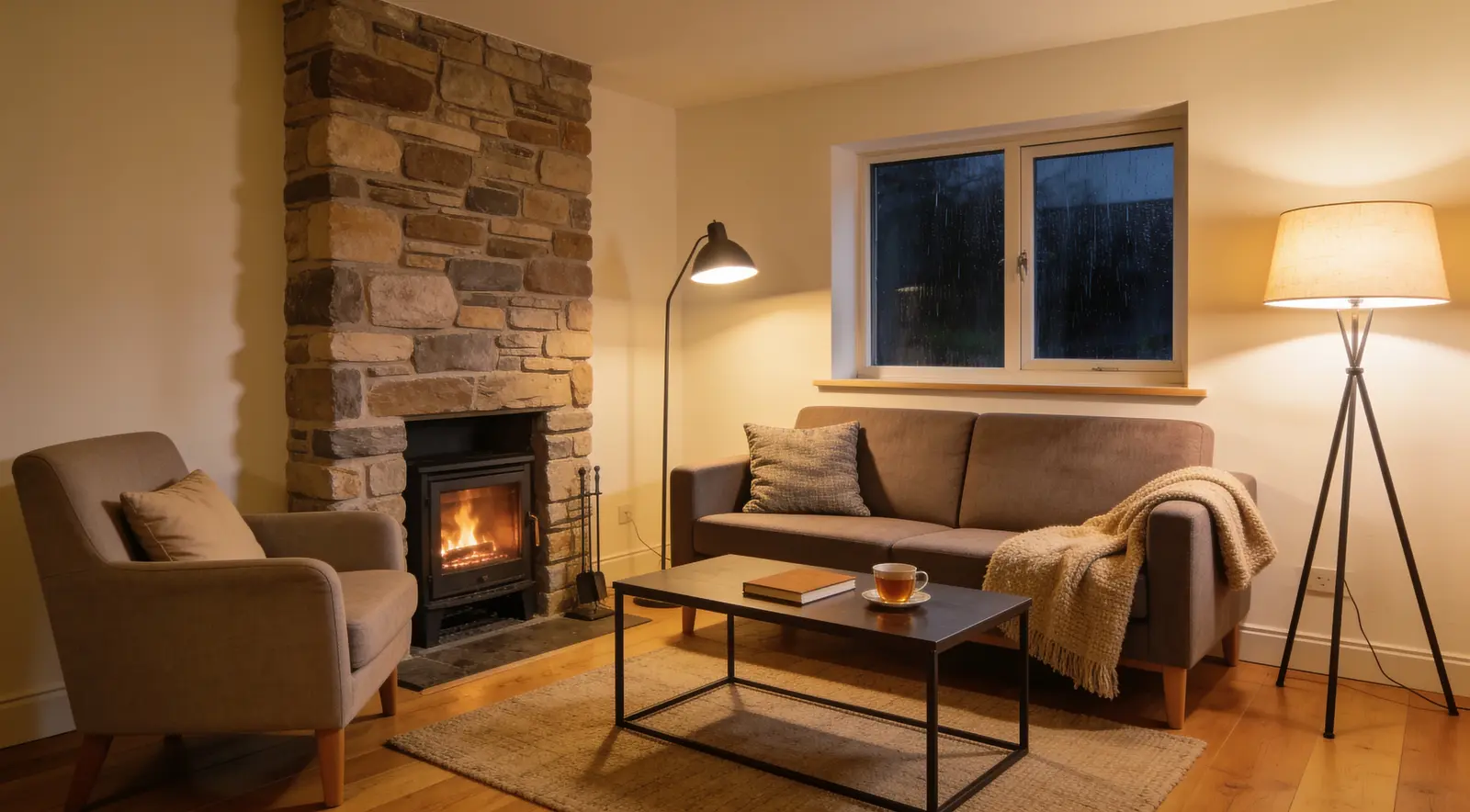
A simple rainy-night checklist
- One supportive seat with a clear view or focal point
- Two or three warm light sources below eye level
- One breathable throw and one heavier blanket
- A stable table within easy reach
- Curtains, rug or books to soften echo
- A clear walking path with no loose cables
What to avoid
Avoid open flames beside curtains or blankets, overloaded extension leads, and so many decorative objects that the table stops being useful. The most convincing cozy rooms leave breathing room around the few things that matter.