Updated 24 October 2026 · Manually reviewed
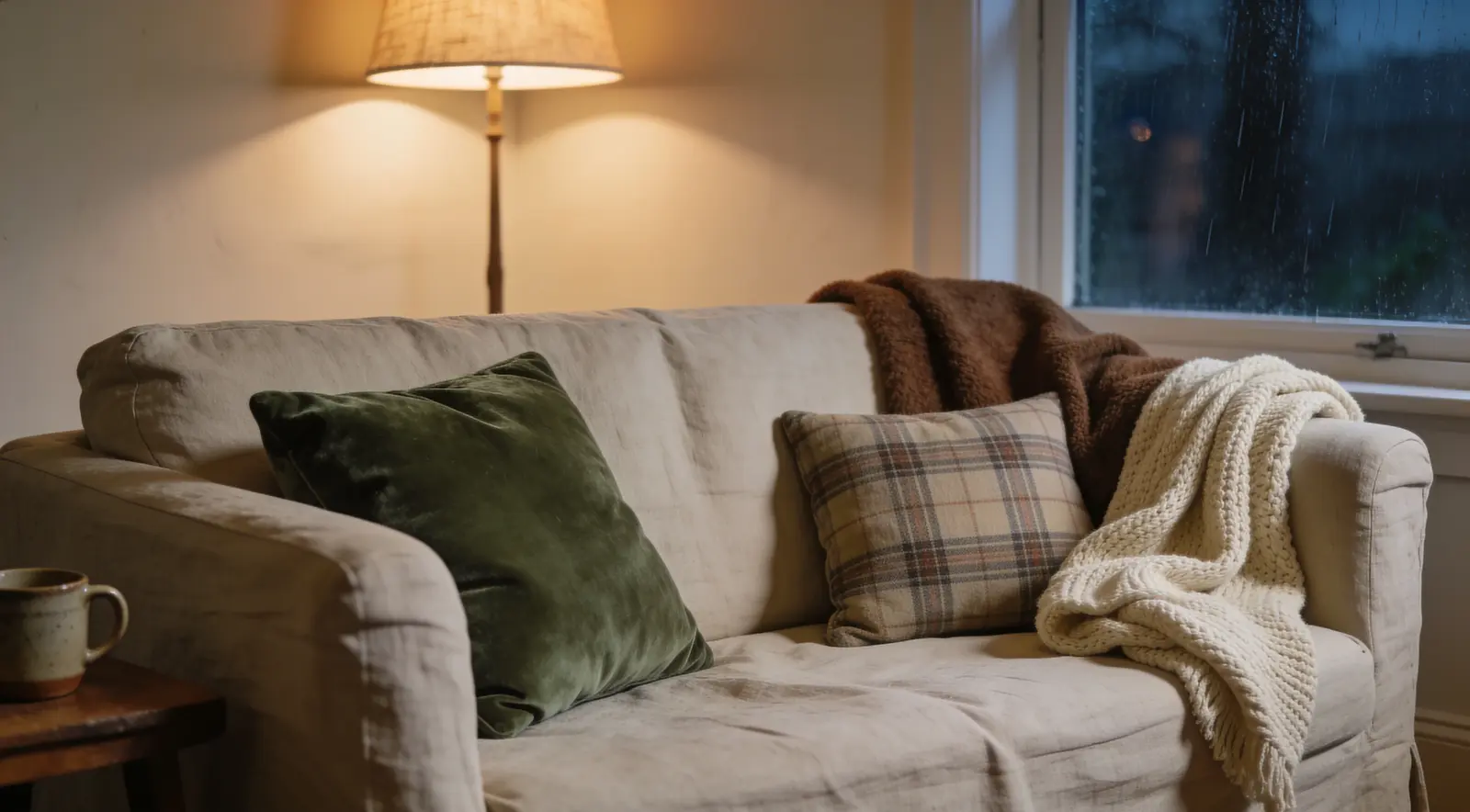
A comfortable sofa is a piece of furniture first and a styling surface second. The most inviting arrangements leave at least one complete seat ready to use, give the lower back real support and make the warmest blanket easy to reach. If every cushion has to be moved before sitting down, the styling is working against the room.
1. Begin with the cushions that solve a problem
Sit on the sofa before adding anything. Notice whether the seat is too deep, the back feels low or the arm is uncomfortable. A firm square cushion can shorten an overly deep seat; a small lumbar cushion can support the lower back; one softer cushion can make a hard armrest more pleasant.
Keep those functional cushions in place. Decorative cushions should be the remaining layer, not a substitute for support. On a compact two-seat sofa, two supportive cushions and one smaller accent cushion are often enough. A larger sectional can take more, provided the corner and at least one straight seat remain usable.
2. Use a simple three-layer order
Build the arrangement from the sofa outward:
- Base: the upholstery and the cushions needed for support.
- Everyday layer: a medium-weight throw that can be used without unfolding a large decorative display.
- Cold-night layer: one heavier blanket folded on an arm, chaise or nearby basket.
This order makes it obvious which textile does what. It also prevents the familiar pile of several throws that look soft but slide onto the floor whenever somebody sits down.
3. Mix texture, not every trend
Texture is easiest to read when adjacent materials are different. Smooth linen beside a chunky knit creates more depth than three similar knits. Velvet can add a quiet sheen; wool brings dry warmth; cotton is often easier to wash; faux fur is visually strong and usually works best as one small layer.
Check how materials behave, not just how they photograph. Loose loops can catch on jewellery or pet claws. Heavy throws may be difficult for some people to lift. Very fuzzy fabrics can shed onto dark upholstery. Read the care label and choose the layer most likely to be washed for the position that receives the most use.
4. Limit the colour story
Start with the sofa colour, then choose one related neutral and one restrained accent. A caramel sofa might pair with oatmeal and moss green; a dark-green sofa might use cream and rust. Repeating a small amount of the accent colour in a cushion or nearby book creates connection without making every item match.
Pattern needs breathing room. If tartan or florals are present, surround them with solids. Two different patterns can work when they share one colour and differ clearly in scale, but they should not compete at the same visual volume.
5. Give the spare layer a home
A blanket basket is useful only if the blanket fits inside without a wrestling match. Fold the blanket to its normal stored size and measure that bundle before choosing storage. A lidded chest hides fibres and pet hair but is slower to access. An open basket is convenient but should sit outside the main walking route.
Rotate by season rather than keeping every textile in the room. Store clean, fully dry blankets according to their care instructions. Keeping fewer layers visible makes the useful ones feel more generous.
The sixty-second comfort check
- Can someone sit down without moving more than one cushion?
- Is the best blanket reachable from the seat?
- Does one cushion genuinely improve support?
- Are loose edges clear of heaters, flames and walkways?
- Can the most-used covers be cleaned practically?
- Is there a defined place for the extra blanket?
For a size starting point, use the Throw Blanket Size Finder. The result is most useful when followed by a tape-measure test on the actual sofa.